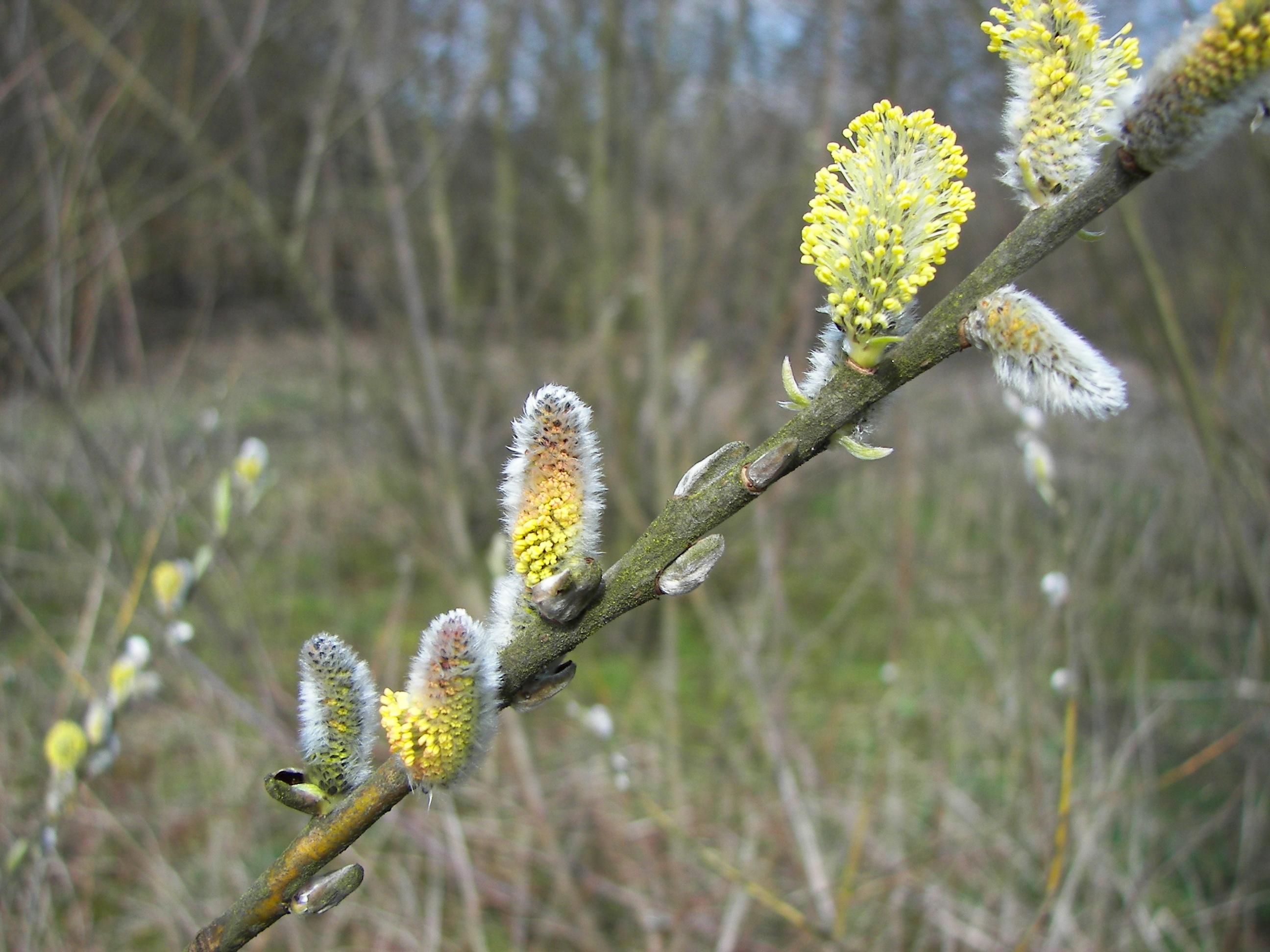
Osier willow (Salix viminalis) is the species most commonly cultivated for basket making across northern Italy. It is fast-growing, coppices reliably — that is, when cut back to the base it produces multiple straight new shoots from the stump — and yields rods with a relatively consistent taper from thick butt to fine tip. This consistency is what makes it suitable for weaving: irregular rods cause uneven tension and produce walls that are difficult to keep straight.
Along the Adriatic coastal zone, osier plots were traditionally established on the slightly elevated ground just inland from the lagoon edges and estuaries, where seasonal flooding could be managed. The damp but not waterlogged conditions favoured rapid rod growth without encouraging the rot that affects willows in permanently saturated soil.
Cultivation and Harvest Timing
Osier is managed on an annual cycle. Rods are cut in late winter — in most of the coastal zone this means from late January through to early March, before the buds break — because rods harvested at this stage have reached their maximum length for the season while still containing relatively little moisture. The lower water content at harvest reduces the drying time required before rods can be stored, and it also reduces the risk of mould during the drying period.
In some workshops, a proportion of the harvest is cut slightly earlier, before the bark has fully tightened against the rod surface. These early-cut rods, when peeled while still fresh, yield white willow — the pale, smooth material used for finer work where a clean appearance is important. Rods left unpeeled and dried retain their natural brown-grey bark; this buff or brown willow is harder, somewhat coarser in texture, and typically used for heavy-duty containers.

Grading the Harvest
After cutting, rods are sorted by length and by the diameter measured at a fixed distance from the butt — commonly at 300 mm from the cut end. This measurement defines the grade and determines which part of a basket the rod is suited for. Thick-butted rods are reserved for staking: they will form the structural skeleton of the base and sides. Medium-grade rods are used for the primary weaving rows. The thinnest rods, often the upper sections removed from longer stems, are used for finishing work, particularly the fine pairing that closes the border.
Grading is done by hand in most coastal workshops: the worker draws bundles through a simple gauge — historically a hole cut in a wooden board — that rejects rods above a certain diameter. Rods that pass through the gauge go into one bundle; those that do not are re-sorted into a thicker grade. The process is fast but requires an experienced eye to avoid mixed bundles, which create unpredictable tension during weaving.
Drying and Storage
Freshly harvested rods are bundled loosely, with the butt ends aligned, and stood upright in a sheltered outdoor space or an open-sided store. The upright position allows water to drain from the cut ends and air to circulate around the bundle. Rods dried lying flat on the ground tend to develop a slight curve in the direction of the ground contact, which is difficult to reverse and causes problems during weaving.
Drying takes several weeks under typical late-winter and spring conditions. Rods that dry too quickly — in heated spaces or in direct sun — are prone to surface cracking. The ideal drying environment is cool, ventilated, and shaded. Once dry, rods are re-bundled tightly in standard commercial bundles and stored horizontally in a dry space, where they can remain in usable condition for well over a year if kept away from direct moisture.
Peeling to Produce White Willow
The peeling of willow to produce white material is done while the rods are still green, typically within a day or two of cutting. The traditional peeling tool is a simple cleft device made from a forked piece of hardwood or metal, through which the rod is drawn butt-first. The tension of the cleft strips the bark cleanly when the wood is fresh; once the rod has begun to dry, the bark adheres and tearing rather than clean peeling results.
White willow rods are then dried in the same way as buff willow. After drying, the peeled surface takes on a pale cream colour. White willow is the preferred material for tableware — bread baskets, fruit bowls — and for woven panels used in interior decoration, where the clean surface is an advantage. It is also the material used in the finest furniture frames produced by the more specialised coastal workshops.
Soaking Before Use
Dried willow must be soaked before weaving. The purpose is to restore the flexibility lost during drying without introducing enough water to cause cracking when the rod is bent sharply. The required soaking time depends on the diameter of the rod, the temperature of the water, and the degree of dryness — rods stored for a long period require more soaking than freshly dried ones.
In coastal workshops, soaking is typically done in a long trough or a section of drainage channel. After soaking, rods are kept wrapped in damp cloth or hessian to maintain their condition during a working session. Any rod that dries out mid-session becomes difficult to work smoothly and is set aside to be re-soaked.
A common check used in the workshops is to bend the tip of a soaked rod into a complete loop: if the tip cracks, the rod needs more soaking; if it bends cleanly without whitening at the point of maximum curvature, it is ready to use.
Reed as a Complementary Material
In Adriatic coastal workshops, willow is rarely the only material in use. Giant reed (Arundo donax) split into stakes or used whole for base rods is frequently combined with willow weavers. The combination takes advantage of the rigidity of reed for structural elements and the flexibility of willow for the interlacing work. Mixed-material baskets of this type are particularly common in the older workshop traditions of the Po Delta, where both materials have been available locally for as long as the craft has been practised.